Running a Supermarket in Kenya: A Practical Guide to POS, Stock and VAT
How to run a profitable supermarket in Kenya — multi-till checkout, perishable stock control, butchery and deli integration, VAT and KRA eTIMS, and shrinkage that quietly eats your margin.
Running a supermarket in Kenya means surviving on a 3–6% net margin while juggling several thousand SKUs, perishables that expire weekly, two or three tills at the front, KRA on your back, and a butchery counter at the back that does not speak the same language as your dry-goods aisles. The shops that survive are the ones that treat the POS, the stockroom and the supplier book as a single connected system — not three separate notebooks.
This guide walks through the operational decisions that actually move the needle for a Kenyan supermarket: how to set up your tills, how to control perishables, how to integrate weighed counters, how to stay compliant with VAT and eTIMS, and where shrinkage hides.
The Front: How Many Tills Do You Actually Need?
A common mistake is to start with one till and grow into queues. Kenyan shoppers will walk to the supermarket across the road if your queue is more than five trolleys deep. The rule of thumb most operators use is:
- Under 80 transactions an hour at peak — one till is enough, but have a second one ready to open during evening rush and weekends.
- 80–200 transactions an hour — two tills as standard, three during peak. This is most neighbourhood supermarkets in Nairobi, Kisumu and Mombasa.
- 200+ per hour — three tills as standard plus a dedicated express lane (under 10 items).
An express lane is the cheapest upgrade you can make. It costs nothing extra and it pulls the impulse-buy customers out of the main queue, which makes the main queue feel shorter to the trolley shoppers and improves the perceived speed of the whole shop.
What a Real Supermarket Till Looks Like
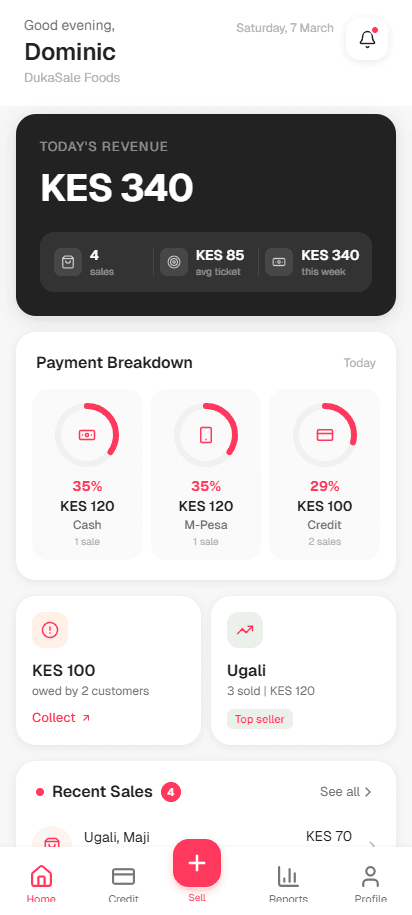
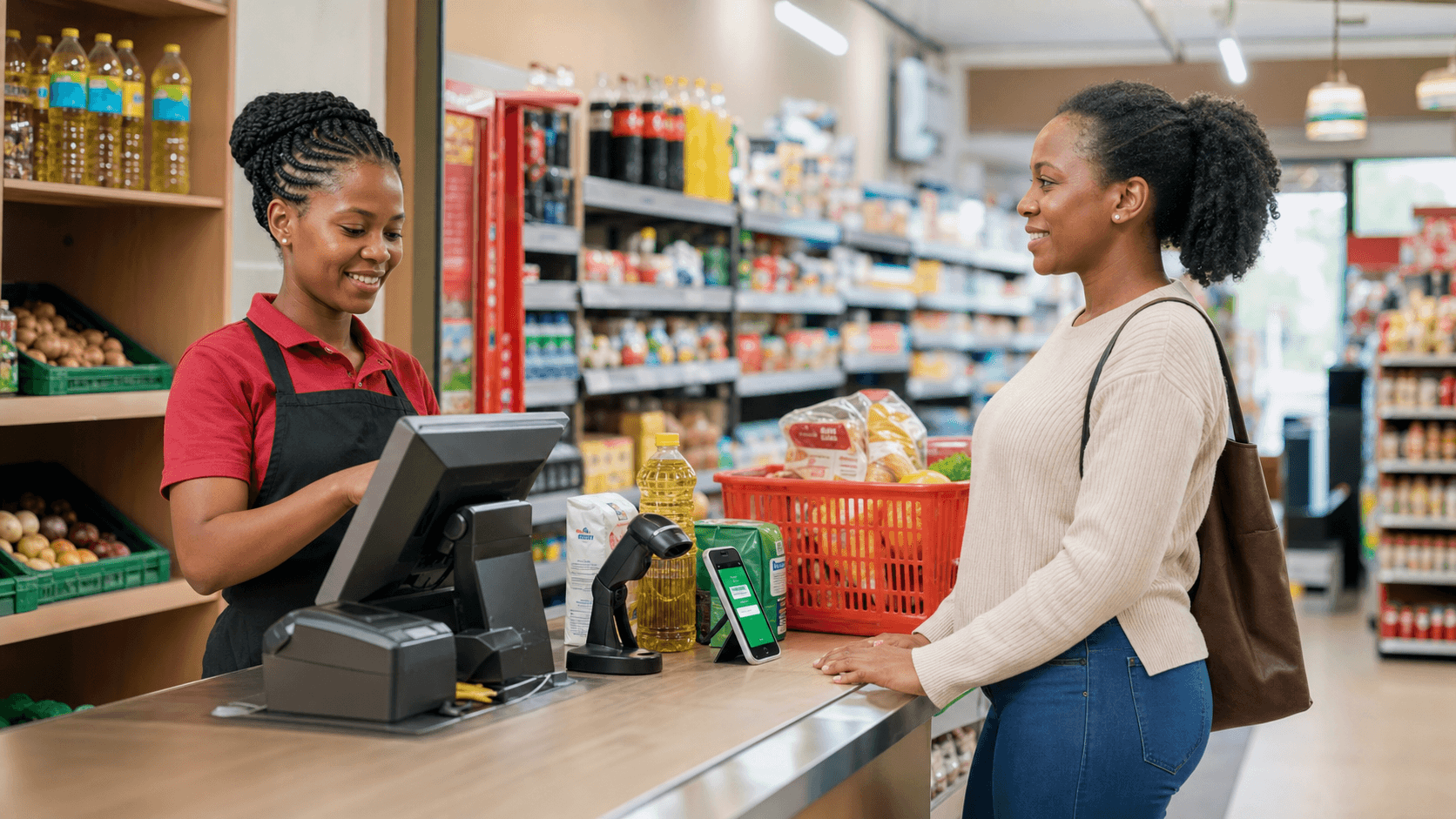
A serious supermarket till is not a phone. It is a small desktop computer or all-in-one terminal behind the counter, running a browser-based POS, with a USB or Bluetooth barcode scanner, a thermal receipt printer, a cash drawer that opens on each cash sale, and a customer-facing display showing the running total. A weighing scale connects either directly to the POS or to the butchery counter behind it. DukaSale's Retail POS is designed for this stack — Chrome on a cheap mini-PC behind the counter, a USB scanner plugged in, M-Pesa STK push wired in for mobile payments.
Stock: The Real Battle Is Perishables
Dry goods are easy. Cooking oil, unga and rice will sit on the shelf for months. The shop closes or it does not, but the stock does not betray you. Perishables are the opposite. Milk, bread, yoghurt, eggs, fresh produce and meat all rot on a schedule that is unforgiving.
First In, First Out — Actually Enforce It
Every supermarket says they do FIFO. Most do not. The new delivery comes in, the storekeeper puts it on top, the old stock at the back gets dust. By the time anyone notices, two trays of yoghurt are past sell-by date.
Enforcement is physical, not policy:
- Shelf rotation rule — new stock goes to the BACK of the shelf, never the front. Train the shelf staff once and audit weekly by looking at expiry dates on the front row.
- Daily expiry walk — a manager walks the perishables aisles every morning and pulls anything within three days of expiry to a "must-go" promo basket at the front.
- Auto-discount the must-go basket — 30% off items expiring in three days, 50% off in two days. The lost margin is a fraction of the loss from throwing the item away.
Track Batches, Not Just Quantities
Two crates of milk that came in on Monday are not the same stock as two crates that came in on Friday, even if they have the same SKU. A POS that tracks expiry by batch (or at least by delivery date) gives you a real picture of what is about to expire. Without that, you only know "I have 18 cartons of milk" — not "12 of them expire on Saturday."
The Butchery, the Deli, the Bakery: Weighed Goods
Most Kenyan supermarkets have a weighing counter at the back — butchery, deli, fresh fruits and vegetables, sometimes a hot food counter. These items do not have barcodes. They have weight, a price-per-kilo, and a label that gets printed at the counter.
The clean way to integrate these into your POS is:
- Counter staff weighs the item on a label-printing scale.
- The scale prints a barcode label that encodes the weight and price.
- The customer brings the labelled item to the till.
- The cashier scans the label and the price is rung up like any other product.
If you cannot afford label-printing scales, the manual flow works too: counter staff fills a paper slip with weight and price, customer carries it to the till, cashier types it in. This is slower and more error-prone but it is what most independent supermarkets in Kenya are running today. Upgrade the scales when you can — the payback is fast.
VAT, KRA and eTIMS: Where Compliance Lives
Once your supermarket crosses the KES 5 million annual turnover threshold, you must register for VAT. Most supermarkets in Kenya are well above that line. What this means in practice:
- VAT-inclusive pricing — your shelf prices are what the customer pays, with VAT baked in at 16% (or 0% for VAT-exempt items like unga, milk, bread).
- Daily Z-report — at end of day every till produces a Z-report showing total sales, VAT collected, and a sequential receipt count. Your accountant uses these to file monthly VAT returns.
- eTIMS — KRA's Electronic Tax Invoice Management System. Every receipt you print must eventually carry a KRA control unit number. The transition is happening in waves; if you are not yet on eTIMS, you will be soon. Pick a POS that has a clear eTIMS roadmap.
- VAT-exempt vs zero-rated — these are different. Exempt items (like financial services) do not appear on your VAT return. Zero-rated items (like exported goods, certain foodstuffs) do appear but at 0%. Your POS should categorise products correctly so the monthly return is accurate.
The Z-Report Habit
Every cashier closes their till by running a Z-report. The Z-report is a snapshot — cash counted in the drawer, sales rung through the system, M-Pesa payments confirmed, credit sales recorded. The till operator signs it, the duty manager counter-signs it, and the cash is bagged for the safe or the bank.
If a till is short by KES 500, you find out at end-of-day, not at the end of the month when the books do not balance. That is the entire point.
Shrinkage: Where the Margin Quietly Disappears
Industry surveys put Kenyan supermarket shrinkage at 1.5–3% of revenue. On a supermarket doing KES 30 million a year, that is KES 450,000–900,000 walking out the door. The split is roughly:
- Staff theft — 35–45%. Cashiers voiding sales after the customer leaves, shelf staff slipping items into bags, deliveries "short" by a few cases.
- Shoplifting — 25–35%. Mainly small high-margin items: chocolate, batteries, razor blades, baby formula.
- Process errors — 15–20%. Damaged stock not recorded, wrong prices keyed in, weighing errors at the deli.
- Supplier shortfalls — 10–15%. The crate said 24 cans, you only got 22.
The Controls That Actually Work
- Every cashier logs in with their own PIN. No shared accounts. The POS records who rang up what and who issued every void or refund.
- Voids and refunds require a manager PIN above a threshold. A cashier can void a wrong scan, but anything above KES 500 needs a manager's approval recorded in the system.
- Reconcile deliveries against the purchase order on arrival. Do not put stock on the shelf and reconcile later — the discrepancy will be lost.
- Spot-count high-shrinkage items daily. Razor blades, baby formula, alcohol miniatures, batteries. A two-minute count of these every evening catches losses fast.
- CCTV on the cash desk, the deli scale, and the loading bay. Not as evidence — as deterrent.
Supplier Discipline
Most Kenyan supermarkets buy from 30–60 suppliers — Brookside for dairy, Bidco for oils, Capwell for flour, Kenchic for chicken, local farmers for produce, plus dozens of small wholesalers. The discipline that separates a profitable shop from a stressed one:
- Issue a purchase order before a delivery. A delivery without a matching PO does not get accepted, full stop. This kills "I am just dropping off a few extras" disputes.
- Receive against the PO line by line. Count, weigh, check expiry dates, then sign. If something is short, the supplier credits the invoice on the spot.
- Pay on terms, not on impulse. If your terms are 30 days, pay on day 30. Suppliers who get paid on time give better prices than suppliers who chase money.
- Review supplier performance quarterly. Who delivers on time? Who short-delivers? Who has the best margins on your top sellers? Drop the bottom 10% every quarter.
FAQ
What POS hardware does a Kenyan supermarket actually need?
A mini-PC or all-in-one touchscreen behind each till, a USB or Bluetooth barcode scanner, a thermal receipt printer (80mm rolls are standard), a cash drawer, and a label-printing scale at any weighed counter. Budget KES 60,000–90,000 per till for the hardware. The POS software runs in a browser, so you do not need anything fancier than entry-level hardware.
How do I handle M-Pesa payments at multiple tills?
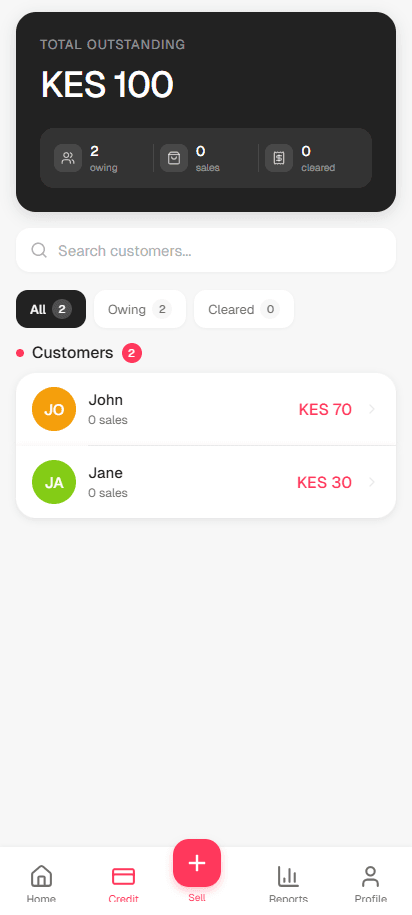
Use a single Buy-Goods till number for the supermarket and let each till issue STK pushes against it. The POS records which till initiated each payment, so the M-Pesa daily statement reconciles cleanly against till-by-till sales reports. Avoid having each cashier accept M-Pesa on a personal phone — that is the fastest way to lose money to "fake confirmation" screenshots.
Can I run my supermarket POS without internet?
The till must stay running during internet outages — that is non-negotiable. A good supermarket POS keeps a local cache, processes sales offline, and syncs to the cloud the moment connectivity returns. Pair this with a small UPS so a 30-minute power cut does not close the shop.
How often should I do a full stock count?
Quarterly for the whole shop, monthly for high-shrinkage categories (alcohol, baby formula, electronics accessories), weekly for fresh produce and perishables. Daily spot-counts on the top 20 items by margin keep the small losses visible.
Do I need to register for VAT before I start?
Only once you cross KES 5 million in annual turnover. Below that you can operate as a non-VAT supermarket — but most supermarkets cross that threshold within the first year. Register before you have to, not after KRA notices.
The Bottom Line
A profitable Kenyan supermarket is not about volume — it is about control. Control of the perishables clock. Control of who voids what at the till. Control of the supplier book. Control of the daily Z-report. The POS is the nervous system that ties all of this together. If the POS is a phone in the manager's pocket and a paper notebook at the till, you are flying blind on a 3% margin. Upgrade the till, train the cashiers, and watch the margin appear.
Ready to try DukaSale?
Free POS app for Kenyan dukas. Track sales, inventory, M-Pesa payments, and customer credit — all offline.
Download Free