The Mitumba Business in Kenya: Bale Buying, Pricing and Running a Modern Mitumba Stall
How to run a profitable mitumba business in Kenya — Gikomba bale buying, grading second-hand stock, pricing per piece, mobile-stall logistics, and the modern POS workflow that brings Kenya\u2019s biggest informal fashion trade into the digital age.
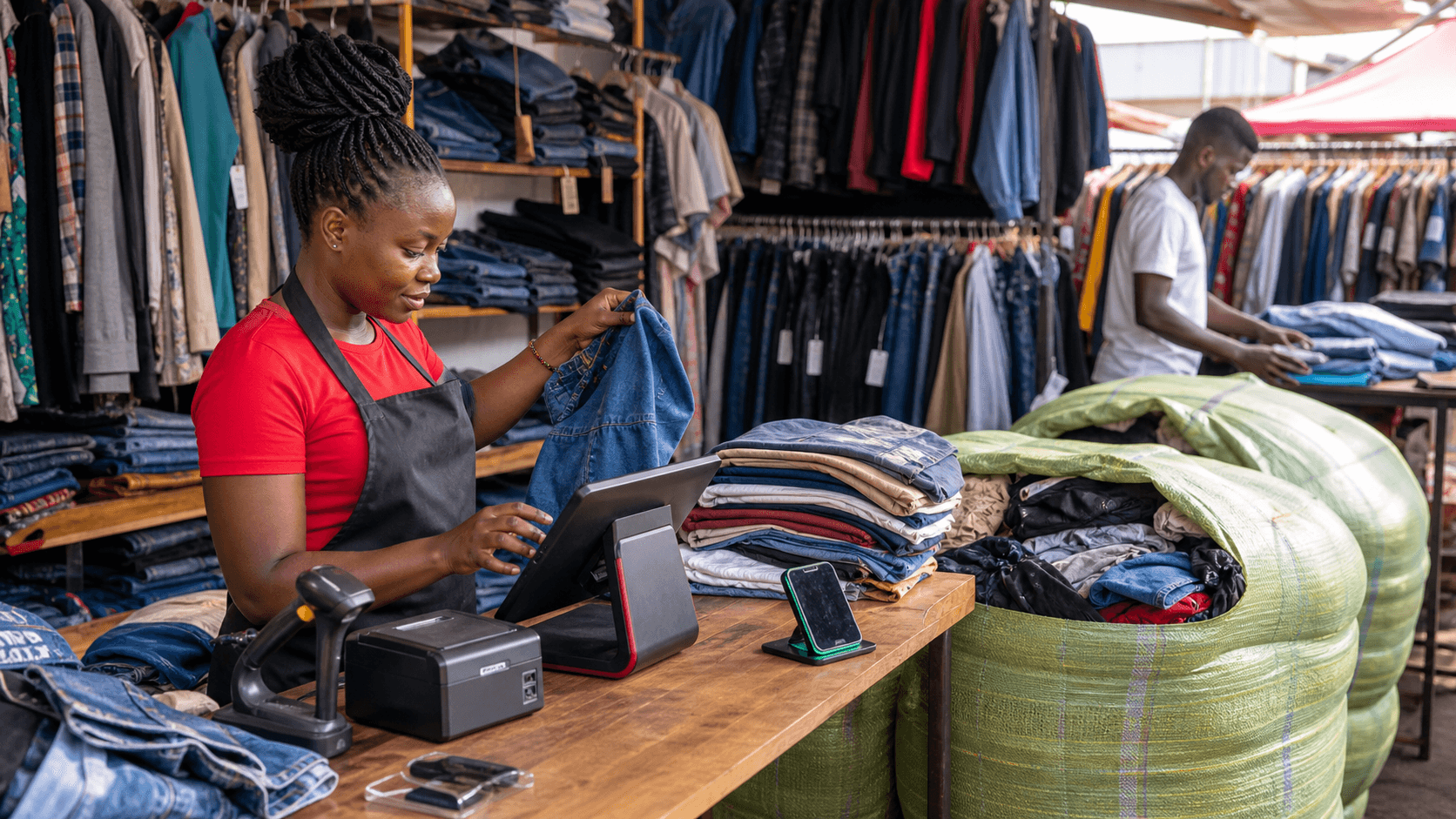
Mitumba — second-hand clothing — is one of Kenya's biggest informal businesses, employing hundreds of thousands of traders from Gikomba to small market stalls in every county. It is also one of the most operationally complex retail trades on the planet: every bale is a lottery, every piece is unique with no SKU, every customer expects to bargain, and most traders run the business out of a notebook, their head, and the rhythm of the market day. The traders who scale beyond a single stall are the ones who turn this chaos into a system.
This guide is for mitumba traders — from the seasoned Gikomba wholesalers to the neighbourhood stall owners in Westlands, Eastleigh, Karatina, Eldoret and every market town in Kenya.
The Mitumba Supply Chain: Where Your Bale Comes From
Before a bale lands at Gikomba, it has travelled a long way. Used clothing is collected in Europe, North America, Japan and Australia, sorted by export grade, compressed into 45 kg or 100 kg bales, and shipped through Mombasa port. Importers — most operating around Industrial Area, Mombasa Road and the back streets of Gikomba — buy containers at wholesale and break them down into individual bales for traders.
The Grades of Mitumba (And Why They Matter)
Not all mitumba is equal. Bales are graded by the importer or original sorter based on condition:
- Cream / Grade A — best quality. Branded, like-new pieces. Highest cost per kilo (KES 200-350/kg depending on category), highest sell-through.
- Grade B / "Camera" — good condition, mainstream brands. The workhorse grade for most traders.
- Grade C — visible wear, less desirable brands. Cheaper but harder to sell.
- "Camera-grade" specials — bales sorted for specific categories: ladies' dresses, men's shirts, jeans only, children's wear.
The bale name tells you the contents and grade. "Ladies' Tops Cream" means top-grade women's blouses and shirts. "Children's Mixed Camera" means mid-grade children's clothing of various types. Knowing what to buy is half the battle.
The Bale-Opening Lottery
Until you cut the bale open, you do not know what you have. A 45 kg bale of "Ladies Dresses Cream" might contain 80 pieces or 130 pieces; some will be summer dresses, some will be heavy winter wear that does not sell in Kenya; one might be a designer piece worth KES 8,000; ten might be unsellable. This is the fundamental risk of the trade.
What Successful Traders Do at Bale-Opening
- Open in a clean space with good light. Markets, garages, or rented sorting rooms. Not your selling stall.
- Sort immediately into three piles: A (premium / boutique-quality), B (regular-priced), C (clearance / KES 100-200 piles).
- Count and photograph the A-pile. Each premium piece deserves an Instagram post or a WhatsApp catalogue listing.
- Price by category before the stall opens. "Today's blouses are KES 600-1,200, today's jeans are KES 800-1,500." Customers price-anchor on the first piece they touch.
- Check for stains, holes, missing buttons. Damaged pieces either get repaired (if it adds value) or sold as "stitching needed" at clearance prices.
The Pricing Problem: Every Piece Is Unique
Mitumba's biggest challenge for a POS is that almost nothing has a barcode, and every piece is one-of-one. A "blue dress, size M" you sold last week is not the same as the "blue dress, size M" in today's bale. You cannot use a SKU-based catalogue the way a supermarket does.
The Category-Plus-Tag Approach
Modern mitumba POS workflows skip SKUs and instead price by category with a paper or sticker tag on each piece:
- Categories in the POS: "Ladies Tops," "Men's Shirts," "Jeans," "Children's Wear," "Shoes," "Accessories."
- At the till: cashier selects the category, types the negotiated price, scans or types the tag number, and rings up the sale.
- The tag links to the bale. If a piece is returned or disputed, the bale of origin is traceable.
- Pricing flexibility: there is no fixed price per piece. The POS records what was actually paid, not a "list price."
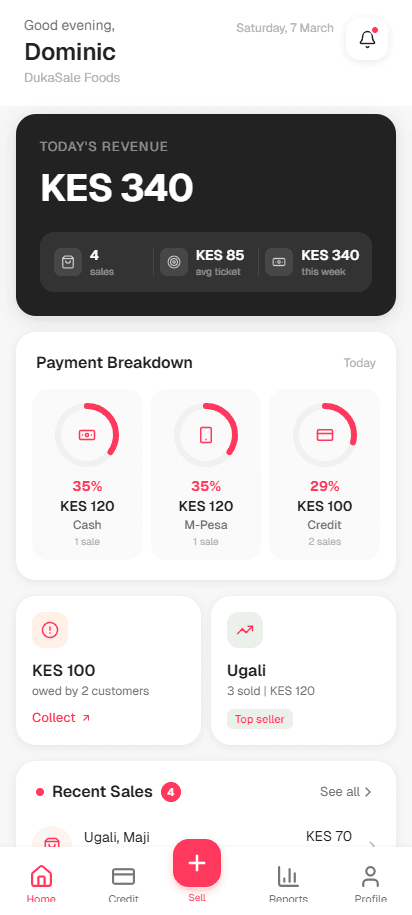
This is the right model for mitumba. Trying to give every piece a unique SKU works once or twice and breaks under volume. Apps like DukaSale's Mobile POS support this open-pricing, category-based flow because they were built for the Kenyan informal-trade reality, not adapted from a Western retail system.
The Bargaining Reality
Every mitumba customer bargains. The asking price is not the selling price; it is the opening offer. A trader who refuses to negotiate loses 60% of potential customers within the first day. But a trader who negotiates randomly loses margin on every sale.
The Three-Tier Pricing System
The traders who scale well use a mental (or written) pricing tier per piece:
- Ask price: the opening figure. Set 30-40% above your floor.
- Comfortable price: where you would happily close the sale.
- Floor price: the lowest you will accept. Below this, walk away.
So a jeans piece bought at KES 200 might have an ask price of KES 1,200, a comfortable price of KES 900, and a floor of KES 700. The POS records the actual sale price; over time, your reports show your average margin per category and let you adjust ask prices upward or downward based on what the market actually pays.
The Mobile-Stall Workflow
Mitumba is rarely a fixed shop. Most traders sell at:
- Daily markets — Gikomba, Kongowea (Mombasa), Kibuye (Kisumu), and dozens of smaller market days.
- Hawking circuits — moving between residential estates with a load of clothes.
- Online via Instagram and WhatsApp — photographed pieces sold to a community of followers.
- Semi-fixed stalls — in market plazas like Toi Market or the upper levels of malls.
This means your POS must work on a phone, offline (most markets have terrible signal), and sync when you get back to better coverage. M-Pesa payments are the standard — STK push if your POS supports it, customer-pulled Buy Goods if not.
Returns and Customer Trust
Mitumba returns are messy. Customers try a piece on at home, find it doesn't fit, want their money back. The trader's options:
- "No returns, fit at the stall" — the cheap shield. Most stalls work this way. Set up a fitting curtain or mirror.
- "Exchange within the market day" — soft policy that builds repeat customers. They can swap for another piece of the same value within hours.
- Refunds rare — only for damaged pieces sold as good. Otherwise the trader's word goes.
Whatever the policy, consistency matters. Customers who trust the trader become repeat buyers who bring others.
Scaling: From One Bale a Week to a Wholesale Operation
The traders who graduate from market stalls do so by working backwards up the supply chain:
- Single stall, single bale per week. Where most traders start.
- Multiple stalls, multiple bales. Hire family or trusted helpers; the owner becomes the buyer and operator.
- Buy from importers directly. Skip the Gikomba wholesalers; buy by container or sub-container.
- Sort and resell as wholesaler. You become the Gikomba intermediary, breaking down containers into bales for smaller traders.
- Import directly. The top of the chain; need significant capital and customs knowledge.
Each step requires more capital, more record-keeping discipline, and more reliable systems. The trader at step 1 with a notebook eventually fails to reach step 3 without digital records of who bought what, who owes what, and what the actual margin per bale is.
FAQ
How much does a mitumba bale cost in Kenya?
Bales range from KES 5,000 (lower grade, smaller weight) to KES 35,000+ (premium grade, specialty categories). Most working mitumba traders buy bales in the KES 8,000-18,000 range. Prices vary by source, season, and grade — and they have risen significantly with shilling fluctuations.
Do I need to register my mitumba business?
Yes — you need a single business permit from your county government and a KRA PIN for any business activity. Once turnover exceeds KES 1 million annually, register for Turnover Tax (TOT) at 1.5%. Above KES 5 million, register for VAT.
How do I track stock when nothing has a barcode?
By category and by tag number. The POS holds categories (Ladies Tops, Men's Shirts, etc.) and each piece gets a paper or sticker tag with the bale number. At sale, the cashier selects the category, enters the agreed price, and records the tag. Stock counts are by piece count per category, refreshed every bale-opening.
How do I move slow stock without losing money?
Daily "KES 100" or "KES 200" piles for unmoved pieces older than 30 days. Bundle clearance pieces (3 for KES 500). Donate or recycle truly unsellable stock — holding it costs you space and morale.
What's the typical margin on mitumba?
A bale at KES 12,000 holding 100 pieces with an average sell price of KES 400 earns KES 40,000 — a 230% gross margin on cost. After clearance discounts and unsold pieces, net margins typically settle at 120-180% on bale cost. The margin is high because the operational labour (sorting, hawking, negotiating) is high.
The Bottom Line
Mitumba is not a business that fits into a Western retail playbook. It runs on bale lotteries, category pricing, daily bargaining, and personal relationships. A POS that respects these realities — open pricing, category-based tracking, mobile offline operation, M-Pesa-first payments — is the difference between a trader who scales to multiple stalls and one who stays at a single mat in the market. The trade is huge. The opportunity for traders who modernise their operations is bigger.
Ready to try DukaSale?
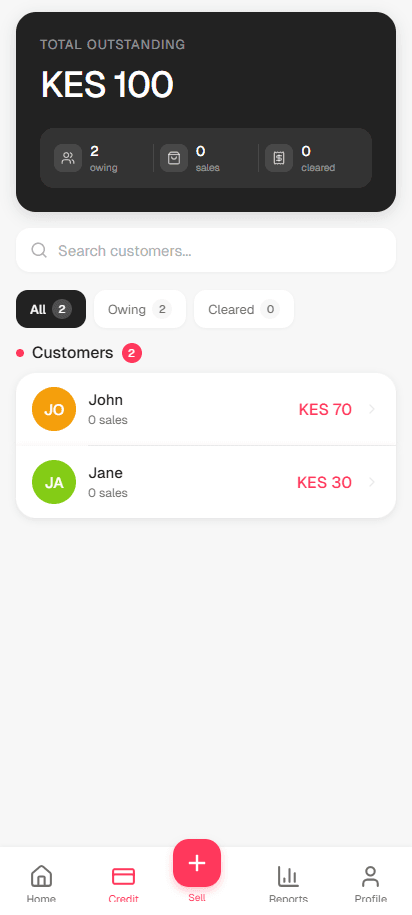
Free POS app for Kenyan dukas. Track sales, inventory, M-Pesa payments, and customer credit — all offline.
Download Free